Tailored: A Very British Fashion
Wednesday, 10th June 2015
PRESS RELEASE June 2015
TAILORED: A VERY BRITISH FASHION
17 July 2015 to 3 January 2016 at Leeds City Museum
Question: What did Ringo Starr, HRH Duke of Windsor, Teddy Boys and a working man in 1800s Leeds have in common?
Answer: They all owned a piece of British tailoring history.
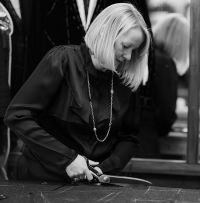
‘Tailored: A Very British Fashion’ celebrates the art and heritage of tailoring from the eighteenth century to today. This unique exhibition at Leeds City Museum, in the city centre, brings together a wide range of examples of British tailoring, revealing a legacy that these skills and styles bring to our fashions today. It explores the development of tailoring as a renowned British skill from Savile Row in London to the Leeds tailoring industry. The exhibition will include a major loan from London’s V&A of Ringo Starr’s jacket, made by Leeds-trained tailor to the stars Dougie Millings, and a bespoke suit commissioned as part of the exhibition by acclaimed tailor Kathryn Sargent. Leeds born and London based Kathryn Sargent was the first woman in the history of Savile Row to hold the position of Head Cutter, and is now the first woman to run her own Savile Row tailoring house. The suit is made from handwoven wool cloth, finished in a Yorkshire mill and is a pivotal 21st century piece within the exhibition.
This major exhibition at the city’s flagship museum includes a diverse selection of garments for men and women charting the changes in tailoring and fashion history. It draws on the nationally important Leeds Museums and Galleries collection, which includes many of the big names of Leeds tailoring such as Montague Burton and Hepworths. Tailored celebrates these Leeds based tailors’ contribution to men’s high street fashion with the inclusion of a Hardy Amies’ suit for Hepworth’s centenary collection and a 1920s Burtons Dress Suit. It also explores the impact of tailoring on style from country wear to formal attire, for the aristocracy to the working class, and includes exquisite examples across the centuries such as a 19th century ladies’ riding habit, made by Leeds’ Legg and Millard and tailored jackets for working men and women from the 1800s to the 1930s. Diversity of the wearers and use is further enhanced with displayed items such as a 1700s child’s silk coat, to an intricately embroidered Privy Council Uniform jacket to a Blades of Savile Row 1960s velvet evening suit.
Tailored also gives an appreciative nod to some of the major British players who have contributed to sartorial style in our century; those designers who recognise that garment shapes may change every epoch, but the constant is that cut, shape, stitch, dart and pleat, define a use and a look of their time. 2015 is no less obsessed with tailoring with 9/10 of GQ readers’ top Best Dressed Men of 2015 featured wearing suits or tailored jackets* and further heightened with a carefully crafted longer-line jacket taking centre stage on the catwalks at the men’s AW 15/16 fashion shows.
Kathryn Sargent’s suit highlights the 21st century’s contribution to the tailoring legacy and the creation and display of this bespoke garment is further complimented with work by contemporary fashion designers Vivienne Westwood, Alexander McQueen and Roger Saul for Mulberry. Tailored is a lesson in history, with the British skill of tailoring and the legacy of Leeds, at its heart.
Ruth Leach, Curator at Leeds City Museum says: “We worked hard to ensure this exhibition has a nationally historical context within which Leeds plays a major hand. With the combination of items from our own collection and the loan from the V&A, we are yet again staging a unique exhibition at Leeds City Museum that showcases the best of British history, throughout which Yorkshire’s legacy is woven. It takes on the journey of tailoring with vibrant and engaging displays, and a schedule of events with a wide appeal. Leeds is rapidly gaining a reputation for staging cutting-edge fashion exhibitions and a reputation we look forward to enhancing with ‘Tailored’.”
Tailored is also the public facing element of a collaborative PhD research project between Leeds Museums and Galleries and the School of History at the University of Leeds which aims to address some of the gaps in current research, and to put the suit and Leeds tailoring into the broader context of fashion history.
The exhibition will be divided into six main themes which will be explored in more detail through key costumes as well as other supporting collection items, including:
• An overview of British tailoring from the 18th century to today;
• The different strands of the tailoring industry, comparing the process and end product of the three major types of fashion: ready to wear, made to measure and bespoke,
• The different concepts of ‘work’ where tailoring, and especially a suit in many different forms, has been the accepted standard of wear,
• The heritage of tailoring from traditional country and sportswear and adaptions for ladies wear,
• Formal wear: how ideas of tailoring have been used and adapted for formal wear, and
• Tailoring in fashion showing how the principles of tailoring have been used in contemporary fashion from the 1950s onwards.
‘Tailored: A Very British’ Fashion runs from 17 July to 3 January 2016 at Leeds City Museum, Millennium Square, Leeds, LS2 8BH and is open every day except Mondays (open Bank Holidays) 10am to 5pm Monday to Friday and to 7pm on Thursdays, weekends 11am to 5pm. Free entry to all visitors. www.leeds.gov.uk/Tailored
To coincide with the exhibition Leeds City Museum is also running a programme of events and activities appropriate for a range of audiences including, GCSE, Further Education and Higher Education students (studying or with an interest in fashion, textiles and design), adult education groups and voluntary interest groups. Visit www.leeds.gov.uk/Tailored for details.
The programme includes:
- Thursday 3 September and Thursday 22 October: 1-1.30pm join our Curator Tour
and find out more about the displays.
- Thursday 15 September: 12-3.30pm including lunch – Make Friends with your Sewing Machine - £10pp Booking essential (t. 0113 224 3726 e. city.museum@leeds.gov.uk) Time to dust off your old sewing machine and learn how to use your sewing machine effectively from basic skills to creating your own drawstring bag to take home.
- Tuesday 20 October: 10-5pm Study Day - £30pp inc lunch and refreshments
Explore aspects of the history of British tailoring and the Leeds tailoring industry – get up close to our collection and enjoy talks from speakers including Timothy Long Curator of Fashion at the Museum of London and Professor Laura Ugolini of University of Wolverhampton. Booking essential (t. 0113 224 3726 e. city.museum@leeds.gov.uk)
- Friday 6 November: 11-3.30pm £10pp including lunch, Learn to Weave with this day for beginners using a peg loom. Booking essential (t. 0113 224 3726 e. city.museum@leeds.gov.uk)
Contact Leeds City Museum for updates.
ENDS
Notes to Editors:
All images © Leeds Museums & Galleries unless noted otherwise – see caption listing for full details in digital dropbox press pack, or contact Kendra PR.
https://www.dropbox.com/sh/q8rbwqko9shaibl/AAA6L8nnzSlOifo52tYg2Stda?dl=0
*http://www.gq-magazine.co.uk/style/articles/2015-01/08/gq-best-dressed-men-in-the-fashion-industry-list-2015/viewgallery/4
Full details of the exhibition, please visit www.leeds.gov.uk/Tailored with updates communicated using the #Tailored hashtag via Leeds Museums and Galleries’ social media accounts on Twitter (www.twitter.com/LeedsMuseums) and Facebook (www.facebook.com/LeedsMuseumsAndGalleries)
For Private View invitations (16 July), press information, interview and photo opportunities with the curator and Kathryn Sargent, and high res images, contact Kendra Grahame-Clarke and Corrie Staniforth at Kendra PR on Kendra@kendrapr.co.uk or call 07910 214474.
Leeds Museums & Galleries
Established in 1821, Leeds Museums & Galleries is the largest local authority-run museum service in England and has one of the larger and most significant multidisciplinary collections in the UK. We care for 1.3 million objects which we use to inspire, educate, entertain and challenge the people of Leeds and visitors to our city. We run nine historic sites and visitor attractions, to which we welcome over 1 million visitors each year, approximately 25% of all museum visits across Yorkshire.
Leeds City Museum
Leeds City Museum is situated in one of Leeds' much loved civic buildings - the Leeds Institute building on Millennium Square. The Leeds Institute is one of the City's most important historic buildings and was completed in 1862 by Cuthbert Brodrick, who also built Leeds Town Hall and the Corn Exchange. From the middle of the last century until 2005 it also housed the Civic Theatre where amateur theatrical groups staged public performances. It has been home to the City Museum since 2008.
The City Museum is the flagship site for the service, and is home to four floors of interactive and exciting galleries showcasing the story of Leeds, as well as the Leeds Mummy and our Designated Natural History collection. In 2013-14 we attracted over 320,000 visitors to our site.
The Collection
The dress and textiles collection at Leeds Museums and Galleries is recognised by the Arts Council’s Designation Scheme as a collection of national and international importance because of the quality and range of the items. From Elizabethan textiles and eighteenth century ladies dresses, to the latest Alexander McQueen coat, the collection gives us insight into 500 years of fashion and furnishings.
PhD Project: Leeds Museums and Galleries and the History Department at the University of Leeds
This research project is investigating the substantial contribution of the Leeds tailoring industry to men’s high street fashion after the Second World War. It aims to address some of the gaps in current research, and to put the suit and Leeds tailoring into the broader context of fashion history. Through its focus on the male suit, which was the primary product of the Leeds industry, the research will also cover the much overlooked area of men’s fashion and raise interesting questions about the ideas of masculinity and fashion.
The exhibition will consider this central research question in a wider context, including a consideration of British tailoring history from the 18th century onwards, traditional fabrics used in British tailoring and the reinvention and subversion of tailoring. It will also consider the influence of tailoring on women’s fashion.
**